CPR and first aid are often mentioned together, but they’re not the same thing. While both are designed to help someone during an emergency, they’re used in very different situations. Understanding the difference can help you respond more effectively and know what type of care is needed until emergency medical services arrive.
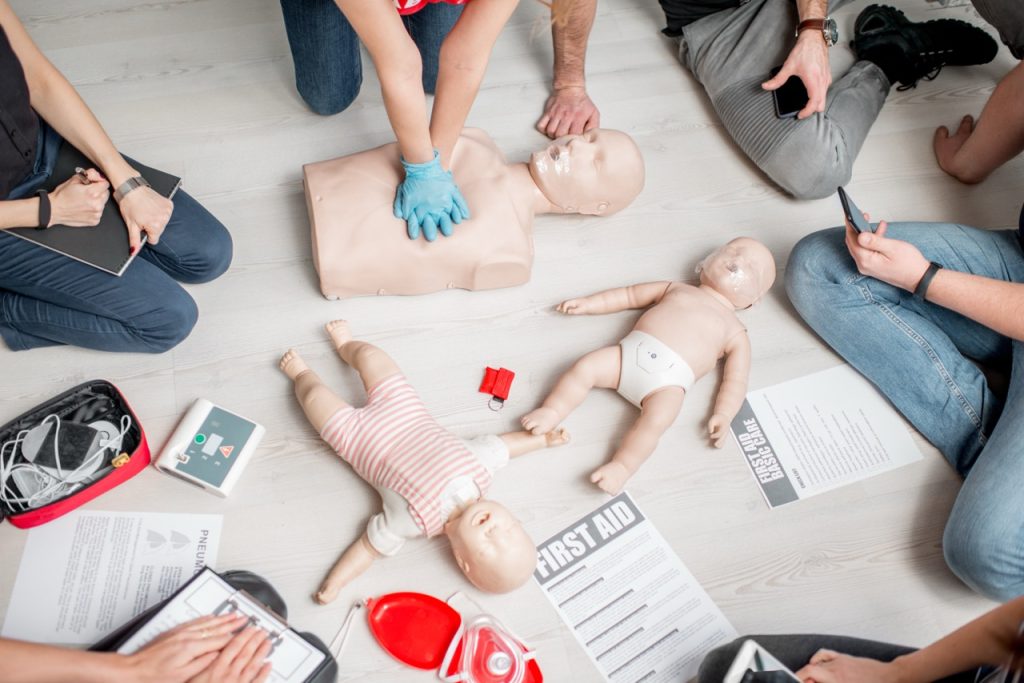
CPR vs First Aid
What Is CPR?
CPR stands for cardiopulmonary resuscitation.
The purpose of CPR is to keep blood and oxygen flowing to the brain and other vital organs when a person’s heart has stopped beating or they have stopped breathing. Although CPR does not restart the heart, it helps keep the body functioning until emergency medical professionals arrive. Performing CPR can maintain circulation during those critical moments, increase the chances of survival, protect brain function, and improve the chances of a successful recovery.
Common situations when CPR is needed:
- Cardiac arrest
- Drowning
- Electrocution
- Drug overdose
- Suffocation
Interested in becoming CPR certified?
Learn about the different CPR training options available.
(link to new blog: CPR Training Options In-Person vs Virtual vs Kiosk)
What Is First Aid?
The purpose of first aid is to provide immediate care for injuries and medical emergencies until an individual can receive professional treatment. First aid should not replace proper medical care, but it can help stabilize the person, reduce the risk of further injury, and support the best possible outcome until emergency responders or healthcare professionals arrive.
Examples of first aid include:
- Allergic reactions
- Burns
- Choking
- Cuts and bleeding
- Heat exhaustion
- Minor head injuries
- Nosebleeds
- Sprains and fractures
Interested in taking first aid training?
Why Learning Both Skills Matters
While CPR classes tend to focus on helping someone who is experiencing cardiac arrest, first aid classes tend to focus on all other emergency situations: cuts, fractures, choking and everything in between. Emergencies are unpredictable; CPR alone doesn’t prepare you for every situation, and first aid isn’t enough if someone’s heart stops.
Taking both of these classes can be extremely beneficial in establishing a more complete emergency response skillset and being prepared and equipped in the event an emergency situation arises.
When Do You Use CPR Instead of First Aid?
When you encounter an emergency, the first few seconds of your assessment are critical. Your objective is not to diagnose, but to determine which intervention is required to help save a life or prevent further injury. But, how do you know whether to start CPR or apply First Aid?
CPR is appropriate when:
- A person is unconscious and not breathing normally
- There is no detectable pulse (or signs of circulation)
- Someone experiences sudden cardiac arrest
First aid is appropriate when:
- The person is conscious or breathing
- An injury needs immediate attention
- The condition can be stabilized until EMS arrives
Before administering CPR or first aid, check the scene for potential safety hazards and call emergency services. Only provide care when it is safe to do so.
Potential Emergency Scenarios to Use Both First Aid and CPR
If the person is unresponsive and not breathing normally ➔ Begin CPR.
If the person is responsive but bleeding heavily ➔ Apply First Aid
If the person is clutching their throat and cannot cough ➔ Apply First Aid (Heimlich Maneuver) until unresponsive, then transition to CPR.
If the person is a drowning victim ➔ Begin CPR after removing them from the water.
If someone is involved in a car accident ➔ Apply First Aid for bleeding before or after performing CPR, depending on the situation.
If a person is choking ➔ Start with First Aid techniques and progress to CPR if they become unresponsive.
Find Out More About What You’ll Learn in CPR and First Aid Training:
What’s the Difference Between CPR and First Aid Training?
Emergencies can happen anywhere, from your own home to work or in your community. Whether you’re responding to a cardiac emergency or providing care for an injury, knowing what to do in those first critical moments can make all the difference. Understanding the roles of CPR and first aid is the first step toward being prepared when it matters most. At HeartCert, we offer both CPR and first aid courses to help you build the confidence and skills needed to respond in an emergency.
Ready to get certified?
This is an updated blog that was originally published in 2015.
HeartCert is your trusted training partner for CPR, ACLS, PALS, EMR, First Aid, CNA, TMA, IV, EKG and more, throughout the United States.
Courses include CPR/AED/First Aid, Basic Life Support (BLS), Advanced Cardiac Life Support (ACLS), Pediatric Advanced Life Support (PALS), Certified Nursing Assistant training, IV training, EKG training, babysitter basics and more. Courses and certifications from both the American Heart Association and American Red Cross are available.
We offer virtual courses and certifications, in all 50 states as well as in-person classes at our headquarters, HeartCert CPR Eagan and major cities in Iowa, Illinois, Michigan, Minnesota, Missouri, Mississippi, Nebraska, Pennsylvania, Texas and Wisconsin.