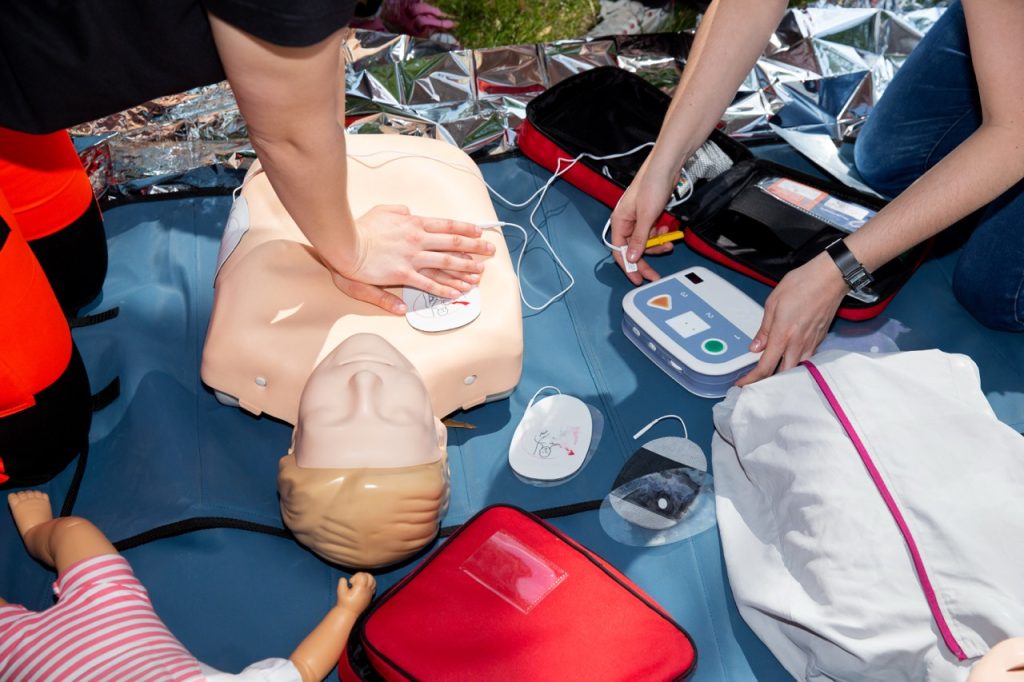
Few people realize just how valuable learning CPR skills is—until they are in the middle of an emergency, realizing they might not have the proper knowledge to take action.
The American Medical Association emphasizes just how important the skill is: CPR can double or triple a person’s chances of survival. With only 1 in 10 cardiac arrest patients surviving an attack, CPR can help change that. Especially if you’re working in healthcare, in an educational setting, or with large numbers of people, where emergencies are more likely to occur.

If you’ve been considering signing up yourself or your team for CPR training, here are the top 5 reasons why CPR skills are one of the most valuable life skills you can learn.
1. CPR Saves Lives
“CPR saves lives” is broadcast almost everywhere, but there’s so much more to that statement. While CPR, quite literally, saves lives, the not-so-subtle implication is that not doing it when it’s needed does the opposite. Even if someone doesn’t fully know what they are doing, it can still help. With certified training and the correct application of CPR when/if the time comes, the odds of a person surviving increase even more.
According to Harvard Health, only 3% of Americans learn CPR each year. Meanwhile, only 6% of roughly 400,000 cardiac arrests survive. With more people trained in administering CPR and ready to take action when an emergency happens, that survival rate could go up.
Related Content: Stories of CPR Success from Everyday People
2. CPR Improves Chance of Survival
The sooner a bystander starts CPR on someone who needs it, the greater the chance of survival in patients experiencing cardiac arrest.
An abstract from the American Heart Association tested the percentage of people who survived out-of-hospital cardiac arrest (OHCA) with no bystander CPR versus situations where CPR was administered, along with the amount of time it was utilized. The graph shows how soon CPR started after the event.

This study shows that the sooner a bystander takes action, the higher the chance of survival. The longer someone takes to initiate CPR, the lower the survival rate.
The more people who know CPR, the more likely that a trained bystander is available in an emergency, improving survival odds. Getting CPR-certified helps train medical staff, teachers, and other people on how to best respond to increase chances of survival.
Related Content: CPR Training Options in Person vs Virtual vs Kiosk
3. CPR Reduces Panic in Emergencies
If someone isn’t educated in CPR or it has been too many years since they last updated their certification, there might be a hesitancy to act when someone goes into cardiac arrest.
Some of the most common reasons bystanders don’t act to perform CPR include:
- Fear of causing injury during CPR
- CPR certification and skills aren’t up-to-date
- Inadequate or forgotten training
- Not wanting to be inappropriate or get too close
- Assuming someone else will offer assistance

Getting CPR-certified can help alleviate some of the most common challenges that arise in an emergency. Whether someone is worried about forgetting the process or doesn’t trust their own knowledge, CPR training works to build confidence and ensure the tools are available for reduced panic and a quick response.
4. CPR Builds Confidence
Because one of the main reasons for not performing CPR on bystanders as needed is a fear of getting it wrong, getting the proper training can help alleviate this. Ensuring you know how to apply CPR correctly can reduce that initial pause when you first notice the signs of cardiac arrest.
Whether you’re in a health-related field, work with kids or sports, or simply want to know how to respond in an emergency, getting your CPR certification helps build confidence. Understanding how the process works, when to apply it, and the importance of timing can give you the tools and knowledge you need.
Related Content: Why Every Caregiver Should Be CPR Certified
5. CPR Training is Widely Available but Underutilized
CPR training facilities led by primary organizations like the American Heart Association or American Red Cross ensure training locations are available in all major U.S. cities. Despite that fact, only 3% of Americans renew their certification annually. To put that in perspective, only 3 people in a room of 100 would have the recent knowledge to confidently take action if someone went into cardiac arrest.
While CPR training is available everywhere, there’s always room for improvement. The best way to ensure bystanders and your loved ones are safe in a cardiac event is to get certified.
Where to Get CPR-Certified
For those considering enrolling themselves or their team in CPR training, it can help create a safer environment and bring peace of mind to people you work or live with. Here at HeartCert, we offer CPR training sessions year-round to help you gain a valuable, lifelong emergency response skill.
Ready to get certified and save lives?
HeartCert is your trusted training partner for CPR, ACLS, PALS, EMR, First Aid, CNA, TMA, IV, EKG and more, throughout the United States.
Courses include CPR/AED/First Aid, Basic Life Support (BLS), Advanced Cardiac Life Support (ACLS), Pediatric Advanced Life Support (PALS), Certified Nursing Assistant training, IV training, EKG training, babysitter basics and more. Courses and certifications from both the American Heart Association and American Red Cross are available. We offer virtual courses and certifications, in all 50 states as well as in-person classes at our headquarters, HeartCert CPR Eagan and major cities in Iowa, Illinois, Michigan, Minnesota, Missouri, Mississippi, Nebraska, Pennsylvania, Texas and Wisconsin.


 Some of the most common staff members to get CPR-certified are the school nurse and coaches. However, any caretaker or teacher who is handling children should get certified for the utmost protection. Anything could happen in a classroom, and every second counts when a child or another adult goes into cardiac arrest. Even sending someone down the hall for help wastes precious time that could save someone.